Indoor Air Quality Solutions in Miami, Florida
Miami-Dade County · Miami, Florida
Indoor air in South Florida presents a unique set of challenges that differ significantly from other regions. Our homes are typically sealed tight to keep the intense heat out, while the AC system continuously recirculates the same air for hours. Coupled with the fact that outdoor humidity is always looking for a way to penetrate the building envelope, achieving a comfortable environment requires proactive management. Cool Air Go assists Miami homeowners and businesses in exploring practical indoor air quality solutions that work effectively with the HVAC infrastructure you already have in place.
The Main Factors Affecting Comfort
Humidity is perhaps the most significant indoor comfort factor in Miami. When indoor air holds too much moisture, it feels warmer than the actual temperature, creating a 'clammy' sensation that often leads to musty odors and moisture-related damage. While every home is different, many comfort guidelines suggest aiming for relative humidity levels between 30 and 50 percent. Furthermore, as we seal homes more efficiently, we often inadvertently reduce natural ventilation. Too little ventilation can lead to a buildup of cooking odors and stagnant air, whereas too much unconditioned outdoor air rapidly increases the cooling load and humidity. We also focus on airborne particles, as dust, pollen, pet dander, and lint continuously circulate through the system, making filtration your primary line of defense.
Identifying When You Need Help
Several clear signs indicate your indoor environment could be improved. If your rooms feel damp or clammy even when the thermostat reports a cool temperature, your humidity levels are likely poorly managed. Other indicators include musty smells when the AC cycle begins, condensation forming on window glass or air vents, dust settling rapidly immediately after cleaning, or a general feeling that the air in closed rooms is stuffy or stale.
Strategies for Better Quality
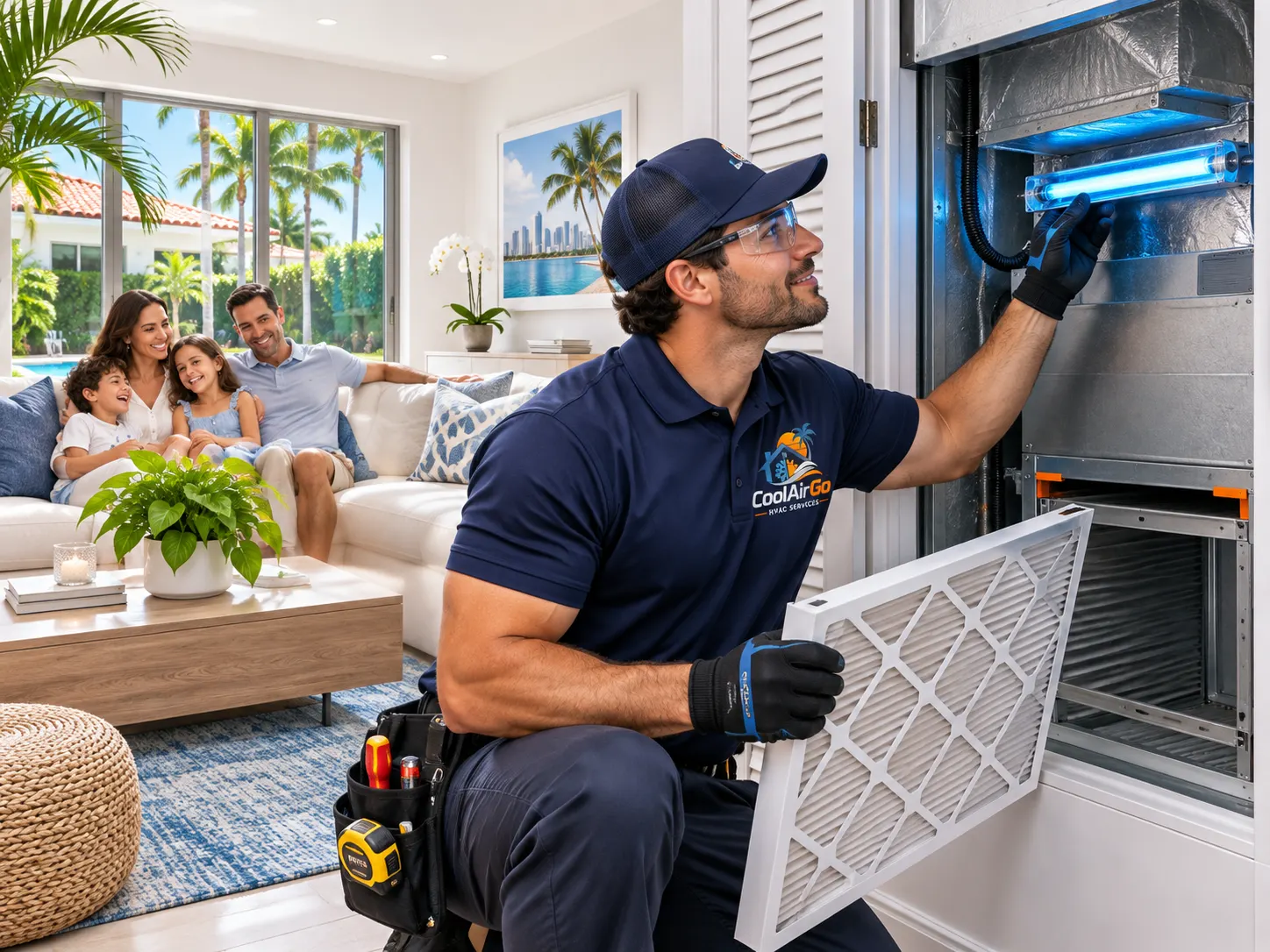
Upgrading your filtration is a highly effective first step. Switching to a higher-efficiency filter or installing a dedicated media filter cabinet helps capture smaller particles. Any upgrade must be balanced with your specific system's airflow capacity; our air purification and filtration page covers these considerations in detail. For humidity management, if your AC unit is not sized correctly, it will not remove moisture effectively. In some cases, we recommend a whole-home dehumidifier or variable-speed equipment for consistent moisture removal. We also evaluate ventilation strategies, such as introducing controlled outdoor air to freshen the home without overwhelming the cooling system. If you are concerned about microbial growth on your indoor coil, we can discuss UV equipment; see our UV air purification page for an objective overview. Finally, consistent AC maintenance ensures that components like the drain pan and blower wheel stay clean, preventing them from becoming sources of odors.
Our Professional Approach
We start by listening to your observations—what you notice, when it occurs, and where in your home it is most prevalent. Our technicians perform a thorough inspection, checking humidity levels, airflow, and the state of your filters and internal components. We provide recommendations with clear reasoning so you can make an informed decision. Please note that we do not make medical claims; if you have specific health concerns, you should consult a healthcare professional. For local businesses including restaurants and retail spaces, we offer commercial HVAC services to address these same issues on a larger, high-volume scale.
Services and useful next steps
- AC Repair in Miami
- AC Installation & Replacement in Miami
- AC Maintenance & Tune-Ups in Miami
- Emergency AC Repair in Miami
- Ductless Mini-Split Services in Miami
- Heat Pump Services in Miami
- Heating Repair & Installation in Miami
- Air Duct Cleaning in Miami
- Air Duct Repair & Sealing in Miami
- Air Duct Installation & Replacement in Miami
- Indoor Air Quality Solutions in Miami
- Air Purification & Filtration in Miami
- UV Air Purification Systems in Miami
- Thermostat Installation & Replacement in Miami
- Commercial HVAC Services in Miami
- HVAC Inspections & Diagnostics in Miami
- AC Drain Line Cleaning in Miami
- Evaporator & Condenser Coil Cleaning in Miami
Local questions
Does my AC system automatically remove indoor humidity?
Your AC removes humidity as a byproduct of cooling, but if the unit is improperly sized or if there is excess moisture intrusion, you may need supplemental humidity control.
Can poor indoor air quality make my allergies worse?
Airborne particles like dust and pollen circulate through your HVAC system. Better filtration can help capture these particles, but we do not make specific medical claims regarding allergy relief.
How often should I have an indoor air quality assessment?
An assessment is a great idea if you notice persistent smells, high humidity, or if you are planning to change your HVAC equipment or home layout.
Other reviewed locations
Doral · Hialeah · Homestead · Indian Creek · Miami Beach · Palmetto Bay · Palmetto Estates · West Perrine
Request service in Miami
Call (754) 294-8274 or send a service request. Requests are not confirmed appointments.
Geographic references
- Miami-Dade County official municipalities
- U.S. Census Bureau TIGERweb geographic place data
- U.S. Census county boundary data
Municipal references support location facts, not business endorsements or proof of completed work.